
A Beginner's Guide to Wine
A somewhat in depth introduction to the world of wine and viticulture, aimed at helping you pick a bottle you will enjoy.

Imagine for a moment that you are a wine novice, only just starting to get your bearings with this wonderfully complex drink. You will likely be grappling with a lot of jargon, strange place names in foreign languages, myriad grape varieties, production techniques, and, let’s be honest, the tedious task of sifting through a tremendous amount of bullshit to piece together information that gives you a deeper understanding of what wine is and how you can improve your chances of spending your hard earned cash on a bottle you will enjoy. It is a well known problem, and wine education is championed by some as the primary tool the industry should deploy to bring new consumers into the fold. I don’t subscribe to that idea, rather leaning towards the notion that a sufficiently good bottle can inspire thoughtful interest in those that might choose to learn more about it, the so-called aha! wine that many wine enthusiasts will be familiar with, and that the problem is one of access and economic barriers. Even so, I recently found myself reflecting on how my own interest in wine started and what resources were available to me at the time. While my initial impulse to explore wine stemmed from misguided notions that wine is one of those subjects a sophisticated person should know at least a little about, it quickly led to a deeper fascination with its range of flavours, its history and the many human stories behind each bottle. It didn’t really take long before I was properly down the rabbit hole, with thoughts of sophistication well and truly replaced by the hedonistic joy of discovery.
Early on I leaned heavily on information from shows like Oz and James’s Big Wine Adventure and the fantastic compendium that is Hugh Johnson’s and Jancis Robinson's The World Atlas of Wine. Similarly, programs like Joe Fattorini’s The Wine Show, brought a lot of joy. Yet in these early days I kept bumping up against the frustrating problem that the majority of resources aimed at beginners either oversimplify the subject matter so much that it invites misunderstandings or broad misconceptions, or simply stop far short of information that is genuinely interesting, for fear that it might be too complicated. The latter is particularly annoying, as it confuses the readers inexperience with the subject matter with an inability to appreciate or understand the fuller picture when presented in a clear and jargon free manner. That is not to say that the efforts by Wine Folly or VinePair are without merit. They are super useful and often contain very helpful graphics that can make the subject less abstract. It is however difficult to find anything out there that is aimed at beginners which also establishes a foundation for future learning in a comprehensive manner in a way that bridges the gap between material aimed at novices and those aimed at existing wine enthusiasts. The closest thing I can think of that does this well is WSET level 2, which while useful is also an experience that comes with a more than modest price tag.
What follows, therefore, is my attempt to piece together an introductory overview of what wine is, where it comes from and how it is made, along with a few useful tips to improve your chances of buying the right bottle. It will not be perfect, and certainly not complete, but I hope it might complement the many existing sources of information already available online. Regular readers of this newsletter, which I admit tends to assume a certain baseline level of knowledge on the reader’s part, may find most, if not all, of this familiar. Even so, I hope it might be worth sharing with friends and family who want to learn more about wine, but are not quite sure where to start. Also, to keep the scope somewhat manageable, I will be focusing on still, dry wines only, leaving sparkling, dessert and fortified wines for a future article should there be interest in it.
What is Wine?
Wine is fermented grape juice. A grape, as we shall see in more detail later on, is a small, oval berry containing the water, sugars, acids, phenolic compounds (including bitter molecules like tannins and various colour pigments), aroma precursors, minerals and microbial life from which wine begins. When the grape is crushed, the juice inside is exposed to yeasts, either those already present on the grape skins and in the winery environment, or those deliberately introduced by the winemaker. These yeasts consume the sugars in the juice and convert them into alcohol, carbon dioxide, heat and a wide range of aroma and flavour compounds. This process, known as fermentation, is the basic transformation by which grapes become wine.

In many ways, it is a controlled version of something that can, and does, happen naturally. Ripe grapes contain sugars, and as soon as yeast gain access to these sugars, they can convert them into alcohol. If grapes are damaged, crushed or left long enough in the right conditions, fermentation may begin on its own. It is unclear exactly how humans discovered this process, but evidence of organised wine making at scale has been uncovered going as far back as 6000 BCE, during the neolithic period. Those early wine makers encouraged, refined and eventually learned to direct this process to produce a product quite distinct from what nature would do if left to its own devices. Over time, these processes improved and evolved into modern winemaking techniques, which while relying on the same fundamental mechanisms as that which created neolithic wine, benefits from a modern understanding of biochemistry and improved equipment such as temperature controlled fermentation vessels and optical grape sorting machines, to create wines that reliably can stand the test of time.
The grapes used for wine are also not quite the same as the grapes most of us are used to eating. Table grapes are usually bred and grown to be large, crisp, sweet, thin-skinned, and often seedless and pleasant to eat by the handful. Wine grapes are generally smaller, more concentrated and less immediately approachable as fruit. They often have more acidity, more flavour intensity, more tannin and, crucially, enough sugar to ferment into a meaningful level of alcohol. Their skins, seeds and pulp contain many of the compounds that will later determine the colour, aroma, texture and structure of the finished wine. A table grape may be refreshing and delicious to eat, but it is rarely able to produce a wine of depth or balance.
Most of the world’s wine is made from a single grape species called Vitis vinifera. This is not the only species of grapevine, but it is the one from which the classic wine grapes descend. Vitis vinifera did not emerge as a neatly trained vineyard crop, but rather as a true climbing vine, using the structures provided by trees and surrounding vegetation as support in order to reach sunlight in the highly competitive ecology of woodland edges, river valleys and disturbed landscapes, where light and water were not always forthcoming. Many of the traits that allowed the vine to succeed in these competitive environments also made it unusually useful to humans. It could be trained, propagated and directed, and it could produce valuable fruit on slopes, stony ground and marginal land that might have been poorly suited to cereals or livestock. In this way, the grapevine allowed people to draw both sugars and alcohol, and generally speaking agricultural value from parts of the landscape that might otherwise have offered relatively little.
The domestication of Vitis vinifera is generally traced to the region around the Caucasus and the broader Near East. From there, the vine moved with people, both as a trade good and as a cultural and religious staple that followed wherever migration patterns and empire took it. Over thousands of years, humans selected vines that ripened reliably, produced desirable fruit and could be propagated from cuttings. One of the most important traits favoured through domestication was the development of hermaphroditic flowers, allowing cultivated vines to pollinate themselves and crop more dependably than their wild relatives, which often had separate male and female plants. This innovation also made cultivation more effective, enabling every single vine to be productive, rather than just the female ones.

Over thousands of years of cultivation, with growers continuously selecting and propagating the best performing and most desirable fruit in many different climates, Vitis vinifera evolved enormous internal diversity, with thousands of distinct varieties existing under the broader Vitis vinifera umbrella. The best known of these include Chardonnay, Pinot Noir, Cabernet Sauvignon, Syrah, Riesling, Nebbiolo, Sangiovese and Tempranillo, some of which are pale-skinned, while others are black. The different habitats these varieties evolved in, and the various genetic expressions selected for by growers, translates into very different behaviours in the vineyard, and very different expressions once yeast have converted their juice into wine. Some are able to hold onto acidity in warm climates, while others need long, cool seasons to express themselves well. Similarly, some varieties accumulate sugars quickly and ripen early, while others need a much longer time on the vine, and often warmer climates to reach full, or so called phenolic, maturity. Some varieties produce deeply coloured, and highly tannic wines, while others result in delicate, aromatic and almost transparent wines.
It is the intersection of grape variety and the place and climate in which it is grown that, leaving specific winemaking techniques aside, determines the characteristics of the wines made. Understanding what is in a bottle of wine therefore begins with understanding the tendencies of the various varieties, and possibly more importantly, the place in which the vine is grown.
Terroir
Terroir is a French term which is derived from the Latin terra, meaning earth, land or soil. Initially used to denote an agricultural area, its current usage has broadened its scope to include every conceivable feature of the local climate, soil, topographical features and even microbial life that in some way influences the growth of the vine. This includes the aspect of the vineyard, or rather its angle and slope relative to the sun. It also includes the drainage characteristics and water holding capacity of the soil, the structure and mineral composition of the soil, rainfall and temperature fluctuations and the proximity of large bodies of water and rivers. The list goes on.
As a consumer, truly knowing the terroir of the place where any particular bottle of wine comes from is unrealistic, particularly when considering the incredible number of individual vineyards around the world, and the fact that each of them, by virtue of their unique location, will have different characteristics. That said, it is possible to get a lot of valuable information from more regional knowledge, and an understanding of the key factors that influence the conditions in which a vine is grown.
Climate
The traditional growing regions of the world lie between the 30th and 50th degree of latitude on either side of the equator. Though global warming is pushing the upper limit of this band ever further north, this geographical band contains the majority of climates deemed optimal for the cultivation of Vitis vinifera. Within these bands, which in the northern hemisphere range from Frankfurt, Germany in the North, to Cairo, Egypt in the South, there is a tremendous range of climates, with large differences in annual rainfall and average temperatures. Those two factors alone greatly influence what grape varieties are suitable for any given region, how quickly they are able to ripen, and the style of wine coming from that area. Broadly speaking, grapes growing in cooler climates, like those found in Northern European growing regions like Alsace, France or Germany’s Mosel valley, will ripen more slowly. Sugars accumulate gradually, acidity is retained for longer, and the growing season can stretch out over a wider window. The result tends to be wines that are lighter in body, lower in alcohol, higher in acidity and showing bright notes of fresh fruit, floral characters, herbs and citrus, and a crisp texture some describe as minerality. In red wines, cooler conditions mean paler colour, firmer, possibly angular tannins and flavours that sit in the red-fruit, savoury or spicy register.

The advantage of a cool climate is balance and delicacy. Because ripening happens more slowly, the grape has time to develop flavour without accumulating excessive sugar. This is why many cool-climate wines feel fresh, precise and energetic. However, cool climates also carry risks. If there is not enough warmth, grapes may struggle to ripen fully. The result can be wines that taste thin, sharp, green, herbaceous or astringent. Rain late in the season can also be a problem, especially if growers need to leave grapes hanging longer in the hope of achieving full ripeness.
Warmer climates push the vine in the opposite direction. Grapes accumulate sugar more quickly, acidity falls faster, and flavours tend to become riper, darker and more generous. Wines from warm regions are often fuller-bodied, higher in alcohol, softer in acidity and richer in fruit character. White wines may move from citrus, green apple and floral notes towards peach, apricot, melon or tropical fruit. Red wines may shift from cranberry, raspberry and fresh cherry towards blackberry, plum, fig, raisin or cooked fruit.
Grapes grown in warmer climates are usually easier to ripen reliably, tannins often become softer and fruit flavours can be more immediately generous. This is one reason warm-climate wines can feel rounder, smoother and more accessible. The risk, however, is excess, and if ripening happens too quickly, sugar can rise before flavours, tannins and acidity are in balance. The resulting wine may be alcoholic, heavy, low in freshness, or dominated by very ripe fruit and in extreme cases, the wine can taste jammy, flat or hot.
Temperature therefore affects wine by changing the pace and character of ripening. To recap, cooler climates tend to preserve acidity and slow sugar accumulation, often producing fresher, lighter and more structured wines, while warmer climates tend to increase sugar, reduce acidity and encourage riper flavours, often producing fuller, softer and more powerful wines. Neither is inherently better. The question is whether the variety, site and farming choices allow the grapes to ripen in balance.
Moderating Features
While a useful shorthand, it is important not to think of climate in terms of latitude alone. Such a broad distinction between cooler and warmer regions is useful, but much of the world’s wine is made within much smaller microclimates created by the local terrain and other moderating features. A vineyard in a generally warm country may still produce fresh, balanced wines if it sits at altitude, where temperatures are lower and nights are cooler. As a result, some of the finest wines made often come from mountainous and foothill regions, which receive enough sunlight to ripen the grapes fully during the day, but experience comparatively large drop in temperature at night which helps preserve acidity, slow the plants respiration and water usage, while extending the ripening period. As mentioned above, slope and aspect are also critical, because a hillside facing the morning sun, afternoon sun or prevailing wind will ripen quite differently from one another, not to mention when compared to a vineyard on a flat site nearby. Mountains also channel air, create shelter, cast shade, generate local air currents and encourage a large diurnal difference, which is the difference between the highest temperature during the day, and the lowest night time temperature.
Large bodies of water, such as seas, lakes and wide rivers, can have an equally important moderating effect. Because water heats and cools more slowly than land, it can soften extremes, cooling nearby vineyards during hot days while reducing the risk of severe cold, or frost at night or in spring. Coastal fog can have a similar effect, delaying morning warming and reducing sunlight intensity, preserving freshness in regions that might otherwise be too hot. A famous example of this is the fog caused by the heating up of California’s Great Central Valley, which creates a lower pressure relative to that on the coast. This pressure differential effectively sucks cold, moist air from the Pacific creating fog which rolls in over the Napa and Sonoma valley. The result is fantastic growing conditions in a region that would easily get too warm for quality grape production otherwise.
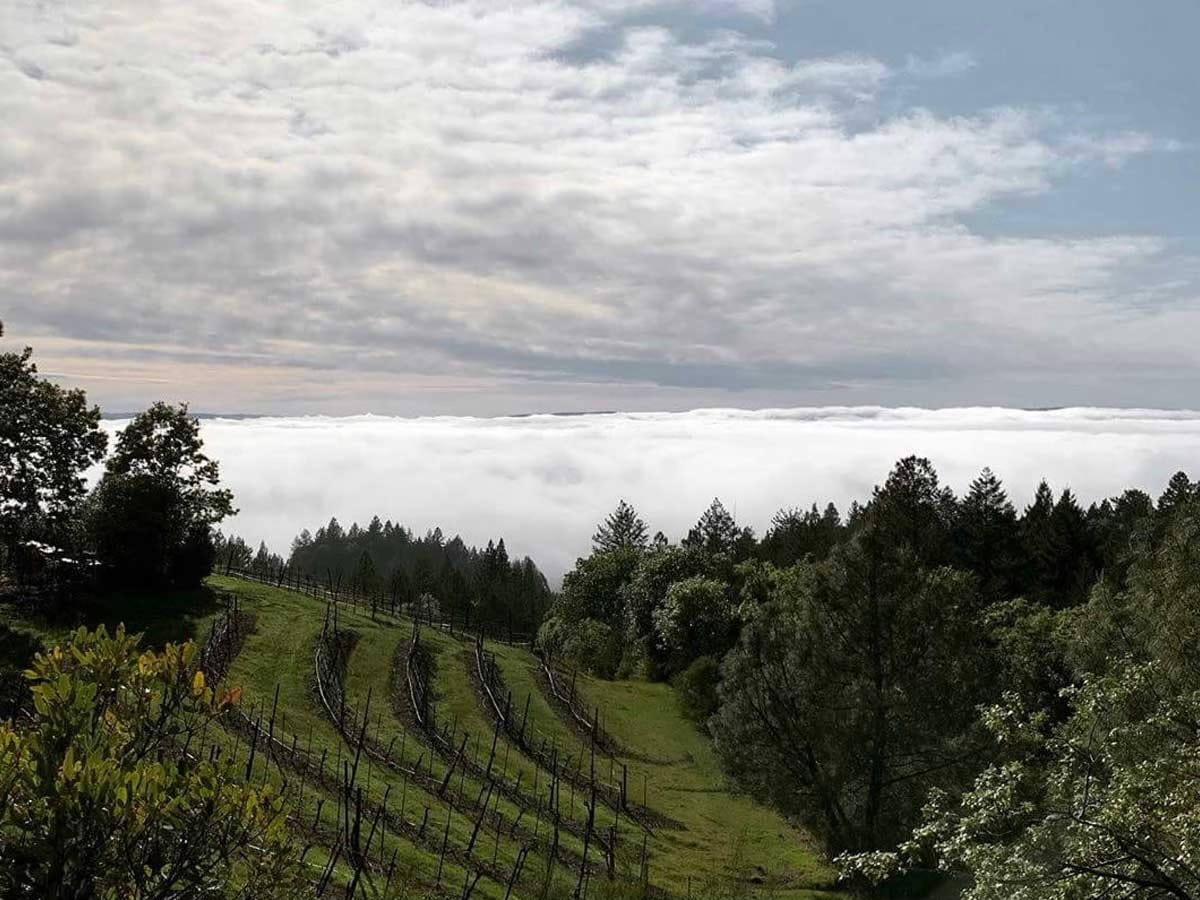
Rivers may also reflect light, influence humidity and create air movement through valleys, while lakes may help extend the growing season for nearby vineyards. These features do not necessarily override climate, but they certainly complicate it and can explain why two vineyards at the same latitude, or even within the same region, can produce very different wines. In practice, the best winegrowing sites are often those where heat, light, water, wind, altitude and exposure are balanced, and well suited to the grape variety grown.
Matching Grape and Place
Matching the characteristics of a grape variety to the site in which it is grown is one of the decisive factors determining the quality of the fruit produced. A variety that evolved or was selectively cultivated in cooler conditions will rarely perform well if planted somewhere too warm, unless the site has moderating features such as altitude, fog, cooling winds or proximity to water. Pinot Noir, the grape used to make red Burgundy, is a good example. In the right conditions, it can produce some of the most delicate, refined and hauntingly complex wines in the world. In a climate that is too warm, however, it can lose the very qualities that make it compelling, leaving it seriously lacking in acidity, with higher alcohol, stewed or jammy flavours, and generally a flat, flabby and one-dimensional character. The opposite problem applies to late-ripening varieties better suited to warmer climates. Cabernet Sauvignon or Zinfandel, also known as Primitivo, may simply fail to ripen properly if planted in a site that is too cool, producing wines with green, underripe tannins and overly vegetal flavours. The extended hang time required to ripen late varieties in marginal climates also exposes the crop to autumn rain, rot and, in some regions, early frost, which may seriously damage the crop.
Most varieties, however, have a range of climates in which they can succeed, creating a diverse spectrum of flavour profiles and stylistic expressions. A good example is Syrah, also known as Shiraz. Its most famous old world expression comes from the northern Rhône, where wines from appellations such as Côte-Rôtie, Hermitage, Cornas and Saint-Joseph can combine dark fruit with black pepper, violet, olive, smoke, cured meat and firm but elegant tannic structure. These are not usually enormous wines in the modern sense and at their best they are savoury, aromatic, tense and deeply structured, with freshness playing a crucial role in their balance. Move the same variety to a warmer climate, and the emphasis can shift dramatically. In parts of Australia, California, South Africa or the southern Rhône, Syrah can become fuller-bodied, darker-fruited and more generous, with flavours moving towards blackberry, plum, liquorice, chocolate, sweet spice and sometimes a richer, more velvety texture. In very warm conditions, especially where grapes are picked late, it may become powerful and heady, with high alcohol, soft acidity and almost jam-like fruit. In cooler or moderated sites outside the Rhône, such as parts of Victoria, Hawke’s Bay, the Sonoma Coast or high-altitude vineyards elsewhere, Syrah can return to a more peppery, floral, savoury register. Syrah has a clearly recognisable identity, but that identity bends with climate. It can be lean, spicy and sinewy in one place, plush and black-fruited in another, and somewhere in between when warmth is tempered by altitude, wind, cool nights or careful harvest timing.
Knowing the general climate of a place, and the main characteristics of the variety used can greatly help in anticipating how a wine will present. We’ll get to selecting wines a bit later on, but though moderating features of the site can create anomalies, it is a helpful guideline, particularly if you know the sort of style you would like to drink.
The following is a short list of common varieties and their general characteristics and climate preferences:
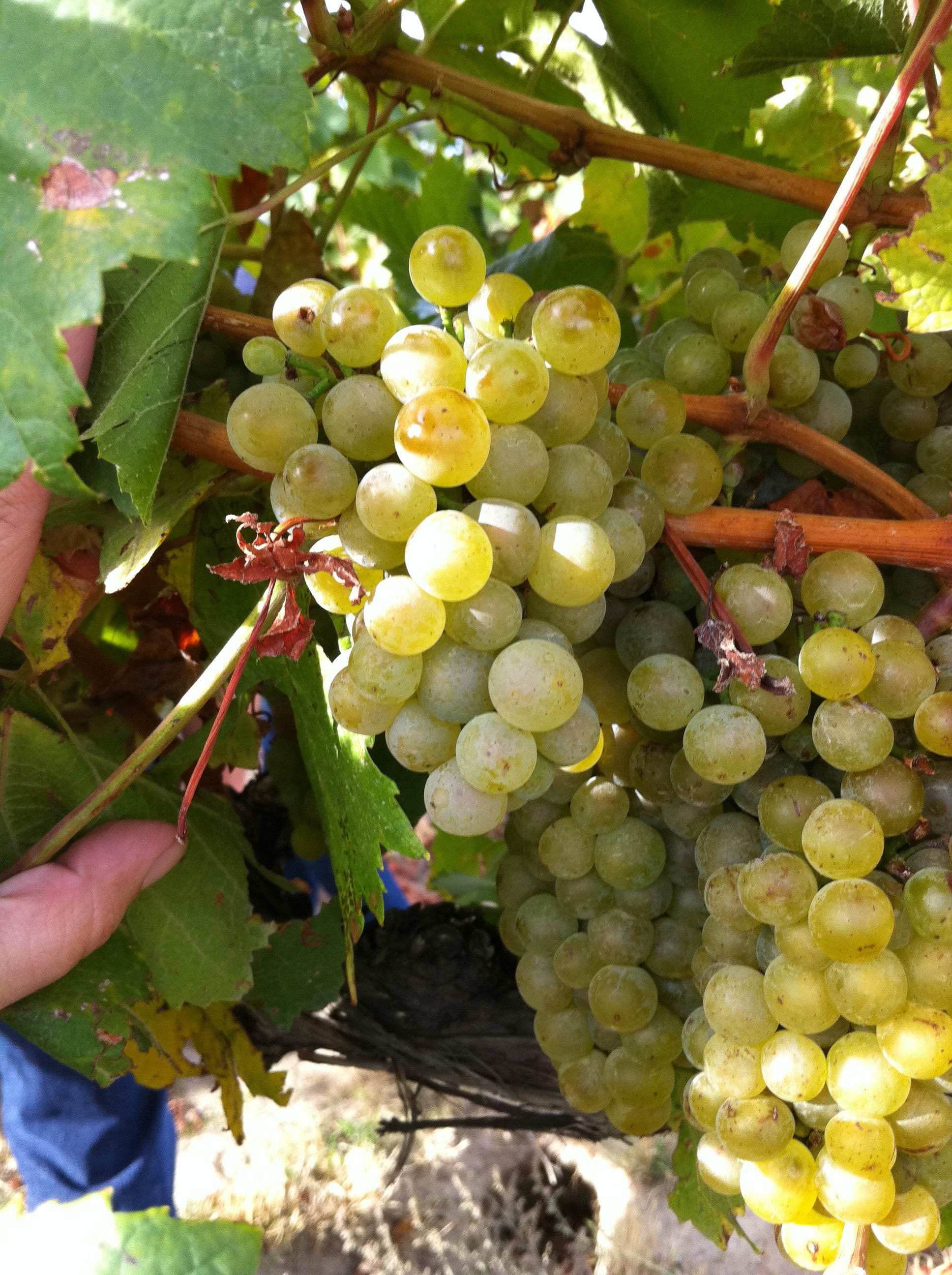
White varieties
Chardonnay: Highly adaptable. Lean, citrusy and mineral in cool sites with richer, fuller and often creamier or oakier expressions in warmer or barrel-aged styles. Suits cool to warm climates.
Sauvignon Blanc: High-acid and aromatic, often showing citrus, gooseberry, grass, elderflower or passion fruit. Best in cool to moderate climates as warmer sites tend to push it towards tropical fruit.
Riesling: High-acid and aromatic, with lime, apple, peach, floral notes and sometimes petrol-like complexity with age. Can be dry, off-dry or sweet. Best in cool to moderate climates.
Pinot Grigio / Pinot Gris: Light, crisp and neutral in some styles; richer, spicier and more textured in others. Best in cool to moderate climates, with warmer sites producing fuller, softer wines.
Chenin Blanc: High-acid and versatile, with apple, pear, quince, honey, wax or wool-like notes. Can be dry, sweet or sparkling. Adaptable, but particularly good where acidity is preserved.
Albariño: Fresh, saline, citrusy and peachy, usually with bright acidity and a coastal feel. Best suited to cool to moderate maritime climates.
Viognier: Full-bodied and aromatic, with apricot, peach, blossom and sometimes an oily texture. Prefers moderate to warm climates, but can become heavy if too warm.
Assyrtiko: High-acid, citrusy, salty, stony and sometimes smoky or phenolic. Well suited to warm, dry, sunny climates because it retains acidity unusually well.
Red varieties
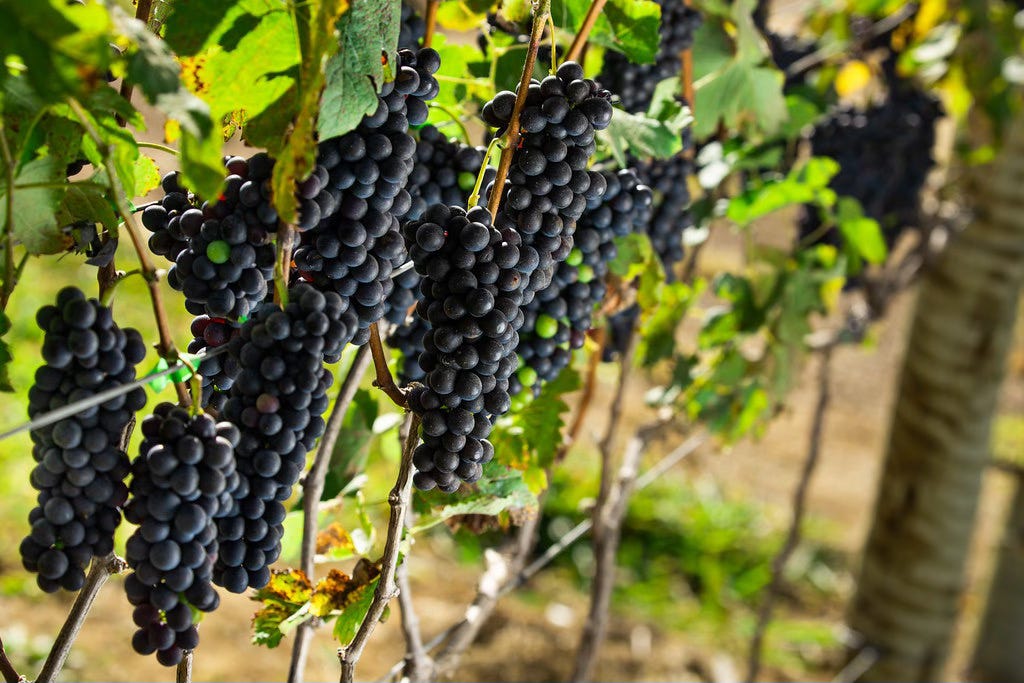
Pinot Noir: Light to medium-bodied, with red fruit, flowers, earth and spice, usually with low to moderate tannin. Best in cool to moderate climates as too much heat can make it jammy and flat.
Gamay: Light, juicy, red-fruited, floral and low in tannin. Best in cool to moderate climates where freshness is preserved.
Merlot: Soft, round and approachable, often showing plum, black cherry, chocolate and sometimes leafy notes. Suits moderate to warm climates and ripens earlier than Cabernet Sauvignon.
Cabernet Sauvignon: Full-bodied, structured and tannic, with blackcurrant, cedar, mint, graphite and tobacco-like notes with age. Needs moderate to warm climates and a long enough season to ripen fully.
Syrah / Shiraz: Medium to full-bodied, with dark fruit, pepper, violet, smoke, olive, meat and liquorice. Cooler sites tend to produce peppery, savoury wines while warmer sites give richer, darker and fuller styles.
Grenache / Garnacha: Generous and red-fruited, often showing strawberry, spice, high alcohol and soft structure. Best in warm to hot, dry climates; handles heat and drought well.
Sangiovese: High-acid and firmly tannic, with cherry, dried herbs, earth, leather and tea-like notes. Suits moderate to warm climates, needing warmth to ripen but freshness to stay balanced.
Nebbiolo: Pale in colour but powerful in structure, with high tannin, high acidity, rose, cherry, tar, herbs and liquorice. Best in moderate continental climates with long growing seasons.
Tempranillo: Medium to full-bodied, with red and black fruit, leather, tobacco and spice, often shaped by oak ageing. Suits moderate to warm climates, especially where altitude or cool nights preserve freshness.
Malbec: Full-bodied, plush and dark-fruited, with violet, plum and chocolate notes. Best in warm, sunny climates, especially where altitude helps retain freshness.
Zinfandel / Primitivo: Ripe, spicy and berry-fruited, with high alcohol potential and sometimes jammy flavours. Best in warm climates, though it can over-ripen easily. Grape clusters often ripen unevenly, meaning some grapes may raisin, adding a characteristic layer of dried fruit and, unsurprisingly raisins, to the aroma profile.
What’s In a Grape
In late summer and autumn, as harvest approaches, growers and winemakers begin watching the fruit with increasing attention. Grapes will be tested for sugar accumulation, acidity and pH, and winemakers will taste the berries, chew the skins, inspect the seeds and assess whether the flavours, tannins and overall sense of ripeness have reached the point they are looking for. The decision to pick is both analytical and sensory and reflects a judgement about balance and flavour. The grapes need enough sugar to ferment into the desired level of alcohol, enough acidity to keep the wine fresh, and enough flavour and phenolic ripeness to avoid green, harsh or underripe characters.
Once that decision is made, harvesting can begin either by hand or by machine. Mechanical harvesters pass over the rows and use a series of rods or beater bars to shake the vine, dislodging the berries from the bunches. The grapes fall onto collection belts or trays, while much of the stem structure remains attached to the vine. This method can be fast and efficient, especially where large areas need to be picked quickly, or where weather conditions or disease pressure make speed essential. Manual harvesting, by contrast, relies on picking crews moving through the vineyard with snips, cutting whole bunches from the vine and placing them into baskets, crates or bins. Hand-picking is slower and more expensive, but it allows for more selective harvesting and keeps the bunches intact, which can matter if the winemaker wants to sort the fruit carefully, press whole clusters, or include stems in fermentation.
The grapes that arrive at the winery can be thought of as small bundles containing most of the components that will shape the final wine. Starting from the inside and moving outwards, the centre of the grape contains the seeds, or pips. These are rich in tannins and bitter compounds. Tannins are not flavours in the simple sense, but structural compounds which create the drying, grippy sensation associated with many red wines. Seed tannins can contribute firmness and ageing potential, but if they are underripe or extracted too aggressively, they can make a wine taste hard, bitter or astringent.
Surrounding the seeds is the pulp, which contains most of the grape’s juice. This juice is made up largely of water, but it also contains the sugars, acids, nutrients and aroma precursors that make wine possible. The main sugars are glucose and fructose, which yeasts convert during fermentation into alcohol, carbon dioxide, heat and a range of aroma compounds. The main acids are tartaric and malic acid, which give the finished wine freshness, tension and structure. As grapes ripen, sugar levels generally rise while acidity falls, which is one of the reasons harvest timing is so important. Pick too early, and the wine may taste sharp, thin or green. Pick too late on the other hand, and it may become heavy, alcoholic and lacking in freshness.
The pulp and the juice it releases are usually pale or nearly clear, even in black grapes. With the exception of a small group of red-fleshed varieties known as teinturier grapes, such as Alicante Bouschet, the colour of red wine does not come from red juice but rather from contact between the juice and the grape skins. This means that the difference between a white wine, a rosé and a red wine is not simply the colour of the grape, but how the grape is handled after it is picked.
The outer layer of the grape is the skin. This thin protective layer is central to the character of many wines because it contains a high concentration of the compounds responsible for colour, aroma, flavour, tannin and texture. In black grapes, the skins contain pigments called anthocyanins, which give red and purple wines their colour. They also contain tannins and other phenolic compounds, which influence bitterness, astringency, mouthfeel and ageing potential. In aromatic varieties, many of the compounds that later become recognisable aromas may be present in or near the skins, sometimes in forms that are only released or transformed during fermentation.
This is why skin contact is so important. For most white wines, the grapes are pressed and the juice is separated from the skins before fermentation, producing wines with little colour and usually little tannin. For red wines, the juice ferments with the skins, allowing alcohol, warmth and time to extract pigments, tannins and flavour compounds. Rosé sits somewhere between these approaches, with black grapes receiving only a short period of skin contact before the juice is drawn off. Orange or amber wines reverse the usual logic of white winemaking by fermenting white grapes on their skins, producing wines with more colour, grip and texture than conventional whites.
On the very outside of the grape is a fine waxy coating known as the bloom. This protects the berry and also carries some of the microbial life of the vineyard, including yeasts and bacteria. Fermentation may be carried out by yeasts naturally present on the grapes and in the winery environment, or by cultured yeasts deliberately added by the winemaker.
How Wine is Made
As soon as the grapes are separated from the vine, the natural process of decay begins, and yeast and bacteria can begin to act, particularly on any berries that might have split during harvest or by the pressure of other grapes in the bins they are collected in. By extension, this is when the winemaking process begins in earnest. On arrival at the winery, the first in a long series of winemaking choices is made, first of which is depends on the condition of the fruit and the desired style of wine, which determines how the grapes should be handled. Grapes may be sorted to remove leaves, insects, damaged berries, underripe bunches or fruit affected by rot. In high-quality production, this can be done by hand on sorting tables, by optical sorting machines, or by a combination of both. The aim is to keep only the fruit the winemaker actually wants to make it into the wine. From this point onwards, however, the path begins to diverge depending on the style being made.

For white wine, the usual aim is to separate the juice from the skins relatively early. White grapes are generally either crushed and then pressed, or pressed as whole bunches. Crushing breaks the berries open and releases juice more easily, while whole-bunch pressing is gentler and can produce cleaner, more delicate juice with less extraction from the skins, seeds and stems. Once pressed, the juice is separated from the solid material, often allowed to settle, and then transferred to a fermentation vessel. This may be stainless steel, concrete, oak, amphora or another container, each of which affects the wine in different ways. Stainless steel preserves freshness and fruit purity, while oak can add texture, oxygen exposure and impart flavours such as vanilla, spice, toast or smoke, particularly if the barrel is new. The intensity of the oak depends on the wood used and how the barrel is made, and the size of the barrel relative to the volume of wine it contains.
Once in the fermentation vessel, yeast begin the process of consuming the sugars in the grape juice and converts them into alcohol, carbon dioxide, heat and a range of aroma and flavour compounds. This can happen through yeasts naturally present on the grapes and in the winery environment, or through cultured yeasts selected and added by the winemaker. Keeping the fermentation temperature under control is immensely important for the quality and character of the final wine. White wines are often fermented at cooler temperatures to preserve delicate aromas and freshness, although warmer fermentations or barrel fermentations may be used for richer, more textured styles. Once fermentation is complete, the wine may be left on its lees, the spent yeast cells and fine solids that remain after fermentation. Lees ageing can add body, creaminess, savoury complexity and a broader texture, especially if the lees are stirred back into suspension.
Some white wines also undergo malolactic conversion, a process in which sharper malic acid is converted into softer lactic acid by bacteria. This is not fermentation in the strict alcoholic sense, but it has a major effect on style and can make a wine feel rounder, softer and creamier, and in some cases contributes buttery or yoghurt-like notes. In crisp styles such as many Sauvignon Blancs or Rieslings, malolactic conversion is often avoided in order to preserve bright acidity while in fuller-bodied styles such as many Chardonnays, it may be encouraged or allowed, contributing to a richer and more rounded mouthfeel and flavour profile.
Red wine follows a different path because red wine depends on extraction from the grape skins. Since the juice of most black grapes is colourless, the colour of red wine has to be drawn from the skins after the grapes are crushed. The grapes are usually destemmed, crushed and placed into a fermentation vessel with their skins and seeds. In some cases, the winemaker may include whole bunches or whole berries, allowing stems to contribute tannin, spice and structure, while also altering the way fermentation proceeds. The decision to destem fully, include some whole clusters, or ferment entirely with whole bunches can have a major influence on the wine’s aroma, tannin and texture.
During red wine fermentation, the skins rise to the top of the vessel, forming a cap above the fermenting juice. Because the colour, tannin and many flavour compounds are in the skins, the winemaker has to decide how actively to mix this cap back into the liquid. This can be done through punch-downs, where the cap is physically pushed down into the fermenting wine, or pump-overs, where juice from the bottom of the tank is pumped over the top. More intense extraction can produce deeper colour, firmer tannins and greater structure, but if pushed too far it can also lead to bitterness, harshness or excessive weight. Gentler extraction may produce a lighter, more aromatic and more delicate wine. These are however not universal rules, and as with all winemaking choices, the best approach depends on the variety, the ripeness of the fruit, the desired style and the judgement of the winemaker.
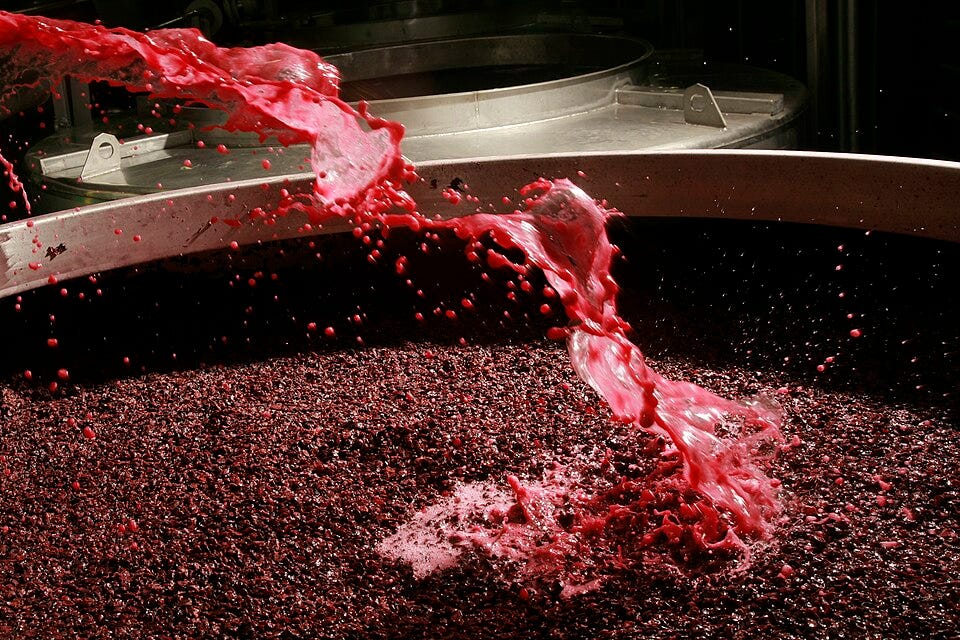
As with white wine, keeping fermentation temperatures under control is very important when making red wine. Warmer fermentations can extract more colour and tannin, producing fuller and more structured wines while cooler fermentations may preserve more delicate aromatics and produce a softer or fruitier style. Some red wines may also undergo a period of cold soaking before fermentation begins, where crushed grapes are held at low temperature to extract colour and aroma with less tannin. Others may be allowed to ferment with minimal intervention, relying on the movement and heat of fermentation itself.
Once the winemaker is satisfied with the level of extraction, the young red wine is separated from the skins and seeds. The free-run wine, which drains naturally, is often softer and more elegant, while the pressed wine, obtained by pressing the remaining skins and solids, is usually more tannic, concentrated and forceful. The winemaker may keep these fractions separate and later decide how much pressed wine to blend back in.
The majority of red wines then undergo malolactic conversion, which softens acidity and helps stabilise the wine. They are then aged in some form of vessel. Stainless steel or concrete may be used to preserve fruit and freshness, while oak barrels, vats or foudres (very large barrels) can add oxygen exposure, texture and flavour. New oak gives more obvious aromas of vanilla, toast, smoke, clove, cedar or chocolate, while older oak has a subtler effect, allowing slow oxygen exchange without strongly flavouring the wine. This is largely due to the fact that repeated use of the same barrels extracts tannins and flavour compounds from the wood, leaving them increasingly neutral. After approximately three vintages, a barrel is usually deemed to impart little to no flavour to the wine.
At various points, the winemaker may choose to blend different grape varieties, vineyard parcels, barrels, press fractions or components treated in different ways. It is not necessarily a way of correcting inferior wine and in many regions it is central to the identity of the style. Bordeaux blends Cabernet Sauvignon, Merlot and other varieties to balance structure, fruit and aroma while the southern Rhône often combines Grenache, Syrah, Mourvèdre and others for similar reasons. Even wines labelled as a single variety may involve blending between different vineyard blocks, clones, barrels or picking dates. Depending on local regulations, a wine can be labelled as a varietal wine even though it contains a certain percentage of other varieties. For California, this threshold is set at 75%, meaning a wine labelled simply as Cabernet Sauvignon, might contain 25% of one or more different varieties.
Before bottling, the wine may be clarified, stabilised, fined or filtered. Clarification allows suspended particles to settle or be removed, often through natural gravity based separation and racking the wine from one vessel into another, leaving sediments behind. Fining relies on a variety of fining agents, such as the mineral bentonite or egg whites, which bind to unwanted compounds, helping reduce haze, bitterness, harsh tannin or instability. Filtration physically removes particles and microbes, giving a clearer and more stable wine. Some producers avoid or minimise these steps, believing they can strip texture or character, while others consider them essential for consistency and reliability. Sulphur dioxide is also commonly used in small amounts to protect wine from oxidation and microbial spoilage, although the amount and timing vary depending on producer philosophy and wine style. It is worth noting that the vast majority of people suffer no allergic reactions when consuming products containing small amounts of sulphites. Dried fruits, fruit juices, processed meat products, biscuits, pickled onions, jams and jellies and even pizza dough, will more often than not contain more sulphites than a bottle of wine. Sulphites are also a natural byproduct of fermentation meaning it is present in all wines regardless of winemaking philosophy.
Finally, once the winemaker is happy with the wine and the time it has spent maturing, a process called elevage, the wine is bottled and sealed, most often under natural cork, screwcap or alternative synthetic closures. Even then, the wine is not necessarily finished developing. Some wines are intended to be drunk soon after bottling, when their fruit is fresh and immediate while others need months or years for tannins to soften, aromas to integrate and flavours to develop. In bottle, the wine continues to change slowly, shaped by the minute oxygen exposure that closures allow through, as well as storage conditions and its own internal structure.

Over time, sometimes decades, complex reactions take place within the wine that often causes some pigments to fall out of suspension, creating sediments. These are usually very bitter, but harmless. Older wines, having been subject to a slow process of oxidation will shift in colour from bright ruby and purple hues towards a paler, more brick red colour, with orange hues towards the edges. For white wines, a similar process takes place, though a pale wine will become darker, much like the white flesh of an apple turning brown when exposed to air. This oxidation brings with it a completely new layer of flavours and aromas, as aroma molecules polymerise, or rather undergo gradual transformations. Such aromas are called tertiary aromas and will include hints of tobacco, forest floor, mushrooms, nuts and leather.
All wine does however have a limited lifespan, and eventually, this oxidative process will go too far, stripping the wine of the qualities that make it good. How fast that process is depends on the properties of the wine, with tannins, acid and sugar being essential in protecting a wine from the ravages of time. Temperature control and storage conditions are also essential. Generally speaking, chemical reactions occur at a much faster rate when temperatures are higher, meaning that a bottle stored in a room or cellar that is too warm will experience premature ageing. Living rooms, kitchens and bedrooms will in most circumstances be too warm for any long term storage of wine. A wine fridge set to around 12-13°C or a cool, dark cellar is ideal, but a regular fridge will be far superior to keeping a wine under room temperature conditions.
Not all wine is meant to age of course, and as mentioned above, many are best enjoyed within a couple of years of the vintage.
How To Pick a Bottle
We’ve all been there, standing in front of a large shelf containing countless bottles of wine, each with its own label, place name, producer, vintage, classification, grape variety or lack thereof, not quite sure what to pick or what any of it really means. Yet if we return to the ideas already discussed, it is possible to decipher the label and make the what might otherwise be a blind guess a more informed decision. As we have covered, a bottle of wine is the result of a grape variety, grown in a particular place, by a particular producer, in a particular year, and made according to a series of farming and winemaking decisions. More often than not, the label will not tell the whole story, but piecing the various clues offered together can be very helpful in honing in on the style of wine you are after.
The label may tell you the producer, the region or appellation the wine comes from, the grape variety, the vintage, the alcohol level, the name of the vineyard or cuvée, and sometimes the farming or winemaking approach. It may also indicate whether the wine is organic, biodynamic, natural, unfiltered, oak-aged, estate bottled, or subject to a particular legal classification. None of these clues should be read in isolation and selecting the right bottle usually comes down to putting the available information together. We know that a grape variety tells you something about the likely structure and flavour of the wine and that the region tells you something about climate, tradition and, though we’ve not really touched upon appellation laws, a series of legal requirements for wines made in certain regions. The vintage tells you something about the year in which the fruit was grown, which if you happen to know how the weather was in the growing region that year might be helpful, but more generally gives you an idea of how mature wine might be. The producer, which in many ways is the most important variable of them all, tells you something about the style, quality and intent behind the wine, provided of course you are familiar with them. The alcohol level meanwhile, may hint at ripeness, body and warmth. Taken together, these details begin to suggest what kind of wine is likely to be inside the bottle.

One complication is that different wine cultures label wine in different ways. In many New World regions, such as Australia, New Zealand, Chile, South Africa and the United States, the grape variety is often placed clearly on the front label. A bottle might say Chardonnay, Sauvignon Blanc, Pinot Noir, Shiraz or Cabernet Sauvignon in large print, making it relatively easy to identify what the wine is made from. In many traditional European regions, however, the place name often carries more weight than the variety. The label may say Chablis rather than Chardonnay, Barolo rather than Nebbiolo, or red Burgundy rather than Pinot Noir. This is because, in these regions, the name of the place is not merely geographical but implies a set of permitted grape varieties, production rules, traditions and expectations. The label assumes that the drinker knows what the place means.
This can seem unhelpful at first, but it is also one of the reasons wine labels can contain so much information in so few words. Once you know that Chablis is Chardonnay grown in a cool northern part of Burgundy, the word Chablis immediately suggests a different style from a warm-climate, barrel-aged Californian Chardonnay. Similarly, Barolo is Nebbiolo from a defined area of Piedmont, letting you know to expect a pale-coloured but structured red wine with high tannin, high acidity and significant ageing potential. Sancerre blanc meanwhile would denote a Sauvignon Blanc from the Loire, from which you can reasonably expect a crisp, aromatic white wine shaped by a cool to moderate climate. The place name becomes a shorthand for variety, climate, law and style. That said, it offers no guarantee of quality.
The most useful way to approach a shelf of wine is therefore not to start with the label, but with the style you are looking for. This is also why the first question a sales person in a wine shop will ask tends to be something along the lines of “what sort of wine are you after?” If you want a light, fresh, red-fruited red wine, you are already narrowing the field and you might look for Pinot Noir, Gamay, Frappato or a lighter style of Grenache. You might favour cooler regions, modest alcohol levels and descriptions that suggest freshness, red fruit, delicacy or brightness. A cool-climate Pinot Noir from Burgundy, Alsace, Germany, Oregon, New Zealand or the far south of Australia is more likely to match that preference than a high-alcohol red from a hot inland region.
By contrast, if you want a full-bodied, dark-fruited and structured red, you are looking for different clues. Cabernet Sauvignon, Syrah, Nebbiolo, Sangiovese, Tempranillo or Bordeaux-style blends may be more appropriate, depending on how much tannin, acidity and oak you enjoy. A warm-climate Cabernet Sauvignon or Malbec may offer black fruit, body and richness, while a northern Rhône Syrah may be darker, peppery, savoury and more restrained. A young Barolo or Brunello may provide structure and complexity, but may also be too tannic if what you really wanted was something soft and easy-drinking. This is where combining a general idea of the characteristics of individual grape varieties and climate will come in handy.
The same logic applies to white wines. If you want something crisp, refreshing and high in acidity, you might look for Sauvignon Blanc, Riesling, Albariño, Assyrtiko, Muscadet, Chablis or other cool-climate whites. These are more likely to give citrus, green apple, saline, herbal or mineral impressions than richness or weight. If you want something fuller, rounder or more textural, you might look for Chardonnay, Chenin Blanc, Viognier, white Rhône varieties or wines that mention barrel fermentation, lees ageing or malolactic conversion.
Alcohol level is another useful clue, though it should not be treated too mechanically. A lower alcohol wine is often, though not always, lighter-bodied, fresher or from a cooler region. A higher alcohol wine is often riper, fuller-bodied and warmer in feel. A red wine at 13% alcohol will usually give a different impression from one at 15%, even if both are technically dry. This does not mean high alcohol indicates a poor wine, nor that low alcohol suggests quality. It simply tells you something about ripeness, body and balance, and in the case of wines with really low alcohol (8-10% ABV) might suggest high amounts of residual or unfermented sugars and thus a rather sweet wine. If you know you dislike heavy, hot or jammy wines, very high alcohol can be a warning sign, though if want generosity, softness and warmth, it may be part of what you are looking for.
The producer is usually the most important clue of all. Two wines from the same grape, region and vintage can taste dramatically different depending on who made them. One producer may pick early, use little new oak, extract gently and aim for freshness and transparency. Another may pick later, use more oak, extract more heavily and make a richer, more powerful wine. As you learn your preferences, finding producers you trust becomes one of the most reliable ways to buy wine. A familiar producer can be a better guide than a famous appellation, a fashionable grape or an attractive label. Also, many producers will often make second wines as part of their range. If a producer is known to make tremendous wines that perhaps are outside your budget, their lower priced entry level wines will often punch above their weight as well.
Vintage matters too, especially in regions where weather varies significantly from year to year. A warm, dry year may produce riper, fuller and more alcoholic wines, while a cooler or wetter year may produce wines with higher acidity, lighter body or more variable ripeness. In marginal climates, vintage can be decisive, while in warmer or more stable regions, it may matter less, though heatwaves, drought, rain and smoke from nearby wildfires can still leave their mark. Given the impact of microclimates and highly localised terroir, vintages are however a terribly unreliable piece of information. What is useful to note however is that the natural variations that occur from year to year may mean that the character and quality of a wine will vary by vintage, and in some cases quite dramatically so. Wine is after all an agricultural product and this is to be expected.
There are also many things that don’t matter at all. For instance, a heavy bottle, an overly ornate label, a back label that is overly poetic, vague or flattering, not to mention a gold medal sticker, is likely to tell you more about how the wine is marketed than the quality of the juice in the bottle. Some terms, such as the “Grand Vin du Bordeaux” you may see written on wines from that region simply mean that it is that producers main wine, and is not there to denote quality. Similarly, “Reserve” may refer to a legal minimum ageing time in some regions, Reserva in Rioja denotes a minimum of 3 years of ageing in bottle before release for instance, while in other countries it may not bear any legal significance at all. The more reliable clues are usually producer, region, grape variety, alcohol level and, where relevant, appellation or classification.
The aim of all this is not to eliminate risk. Wine is too varied for that to be possible, and the slight gamble and sense of discovery when buying a bottle is I think part of the pleasure. The aim with learning these things however is to make better guesses. If, through trial and error, you know whether you want light or full-bodied, crisp or soft, tannic or smooth, fruity or savoury, oaked or unoaked, young or mature, you can begin to use the label as a map. While the bottle will never tell you everything, it can tell you enough to move away from random selection or blind trust in a sales person that does not actually know what you like to drink, or may have very different preferences from yours.
Final Thoughts
For someone that might be new to wine, I appreciate that the above may be a lot to take in, but I hope that by beginning to think of wine as a product of growing region, variety and a series of winemaking decisions that shape style, you might feel more comfortable in navigating what undoubtedly is an extremely complex and varied topic. At the end of the day however, wine is a drink and the main point of it is to be enjoyed, and knowing every detail about how it is made is no prerequisite.
You may have noticed that I have not touched upon how to drink wine. For this there are abundant resources available, and I don’t think there is much point in adding to that here. I will briefly say however, that most gadgets, beyond a good corkscrew and a decent universal wineglass (I’d recommend the Zalto Universal as a good one size fits all glass), there is not much you need to get the most out of a bottle. Observe, swirl, sniff, drink and reflect, but most importantly of all, enjoy.
Thank you so much for reading, and if you haven’t already, please consider subscribing. If there are any glaring errors or omissions, though an introduction to wine such as this can never be complete, please let me know so I can correct or amend it.