
Spraying for Drought
Can a proline-based foliar treatment help vines prepare for water stress before it arrives?

Since the dawn of agriculture, farmers, much like mariners, have been obsessed with the weather and any portents that might allow them to forecast the future. Though our understanding of what shapes weather has improved tremendously, you need not spend a lot of time talking to farmers before local wisdom seeps into the conversation. On my last trip to Greece, amidst idle chat while waiting for someone to bring the wheat I had bought, I asked an agricultural consultant whether he thought rain would come soon, and he was quite confident that because there was still snow on the mountains, rain would not be far off. Of course, he could back that up with advanced multi-model forecasts based on hundreds of millions of data points should he want to, but knowing the region where you live and farm well is as important today as it has ever been. He was also not wrong, as rain washed across the region a few days later.
The reason for this obsession with weather is obvious. If you know what the near future holds, you can make key agronomic decisions, such as when to sow, when to harvest, and when to simply be patient. The more accurate the forecast, the better you can prepare your field and protect the crop from damage should the weather be inclement. Yet for the most part, modern farmers are as much at the mercy of the weather gods as they have ever been. No matter how accurate the forecast, there’s not much you can do to change the weather phenomenon that approaches. That climate change is making things more volatile than ever, while increasing the severity of whatever weather there may be, is also not helping. The farmer’s job is to take a disadvantageous weather forecast and do whatever is possible to mitigate the consequences. More often than not, this requires long-term planning, with appropriate measures such as drainage channels or tiles being installed to handle a sudden heavy downpour, the use of cover crops to hold the soil in place and prevent erosion, while also making sure water infiltrates rather than washing off the top of a hard, bare surface. A drought on the other hand may force the farmer to rely on irrigation to keep the vines or other crop alive. Shade cloth might be used to protect the fruit from sunburn, and again, cover crops can help keep soil temperature down and prevent moisture loss and wind erosion. Whatever the countermeasure, it is a battle of human ingenuity against the elements. Usually, nature just needs to keep it up long enough and it will win the battle.

With drought in particular, a problem that is becoming increasingly difficult to handle in regions that already sit at the cusp of being too warm for quality wine production, there are very few, if any, countermeasures that leverage the plant’s own defence systems. That is why a recent episode of the Wine Blast podcast by MW duo Susie Barrie and Peter Richards caught my attention. In an episode sponsored by the Canadian biotechnology company Lallemand Oenology, they highlight several of their products, one of which is called LalVigne PROHYDRO, and makes the rather extraordinary claim of being able to help vines survive drought.
Per the product’s tech sheets (here and here), and as very superficially covered on the podcast, it is a natural derivative from yeast that acts as a natural stress shield. Applied as a foliar spray prior to forecasted high water stress events, it is designed to help the plant maintain cell turgor, boosting the vine’s own defences and increasing vine tolerance to water stress. The podcast quoted some research suggesting it could save 170–340 cubic metres of water per hectare per year where applied, and that equivalent yields can be achieved with 20–25% less water. If accurate, that is a rather extraordinary claim that is worth exploring in more detail. Of course, I am not sponsored by large biotech companies, not necessarily out of principle, mind you, which gives me a little more freedom to explore potential downsides of a product like this, but at first glance it is extremely interesting.
How Does It Work?
LalVigne PROHYDRO is best understood as a foliar “stress-preparation” spray for vines, not as a fertiliser, irrigation substitute, or magic drought cure. It is designed to be sprayed on leaves before or during the onset of water stress, so the vine is better able to keep functioning when dry heat would normally slow photosynthesis, collapse transpiration, dehydrate berries, and push fruit toward sunburn or unbalanced ripening. Lallemand describes it as a microorganism-derived product for viticulture, made from a Saccharomyces cerevisiae yeast derivative plus L-proline derived from Corynebacterium glutamicum, applied at about 1 kg/ha as a foliar spray.
When a vine becomes water-stressed, it tries to conserve water by closing stomata, or the microscopic openings or pores in the epidermal surface of its leaves. That reduces water loss, but it also reduces CO₂ intake, so photosynthesis slows. If the stress is strong or prolonged, leaves overheat, chlorophyll degrades, photosynthetic machinery is damaged, berries shrivel, sunburn risk rises, and ripening becomes less orderly. For those interested, I posted an article a while back on how a vine experiences and deals with a heat-spike event, which might give some helpful background for this article.

In short however, excessive water deficit reduces physiological activity, can impair recovery of the leaf photosynthetic system, can lead to early leaf senescence and leaf drop, and can worsen bunch ripening. Sufficiently severe droughts and heat spikes may also kill a vine weakened by disease or repeated high stress events.
The key active ingredient in the product is the amino acid proline. It is a molecule the vine already produces for itself when placed under stress, which is part of what makes the logic of the product relatively easy to understand. Proline is not a nutrient in the way nitrogen, potassium or magnesium are nutrients, but is a compound which under drought conditions functions more like a small biochemical stabiliser. It is one of the compounds plants synthesise and accumulate when the normal water balance of their cells begins to break down. As soil dries and evaporative demand rises, the water potential gradient between the leaf and the surrounding air becomes more severe, and the vine has to work harder to maintain the flow of water from root to shoot. If that flow cannot keep pace, water begins to leave the cells faster than it can be replaced. Cell turgor, the internal pressure that keeps plant cells firm and expanded, starts to fall.
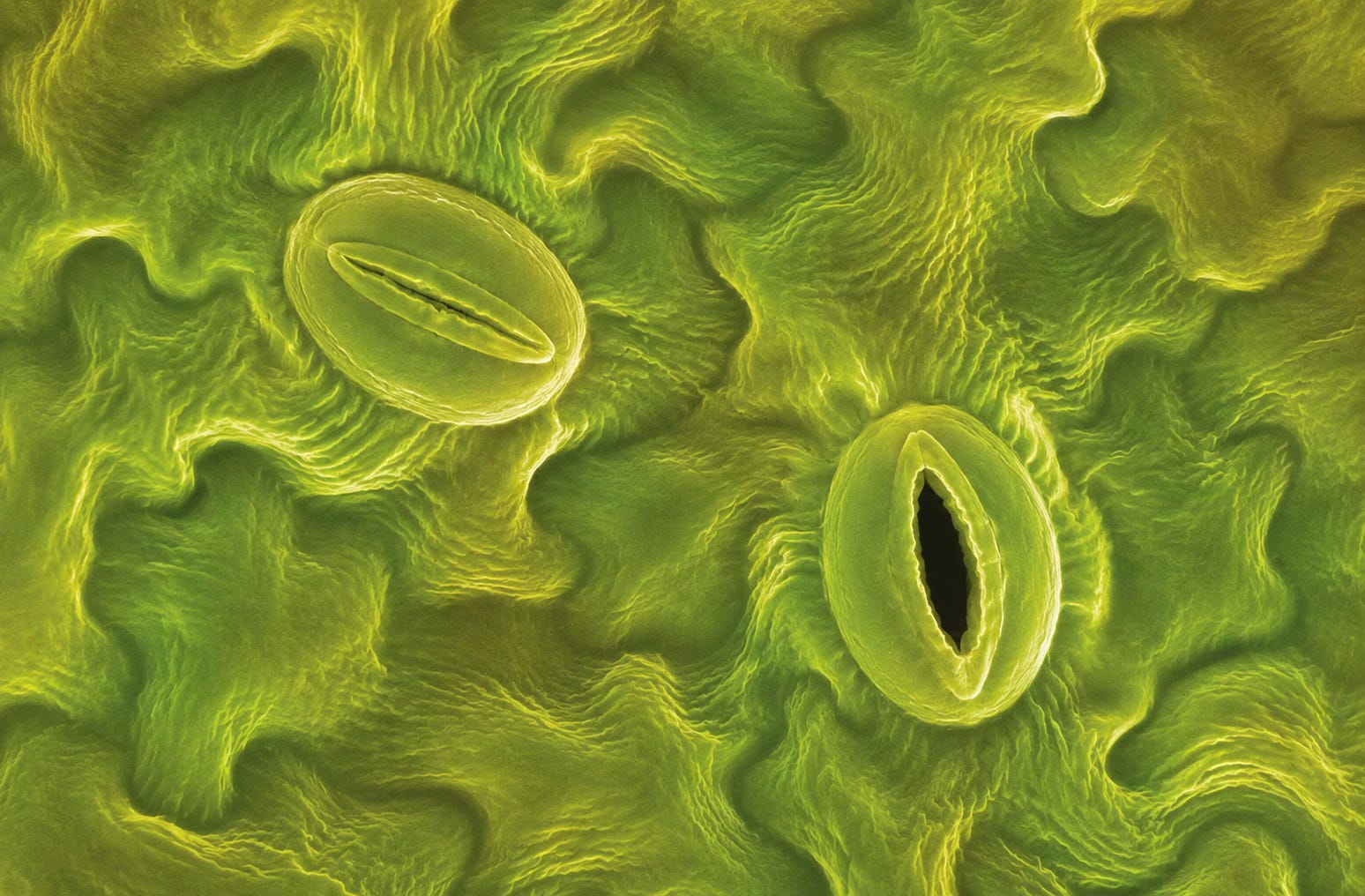
Once cell turgor declines, as I’m sure most house plant owners will have noticed, leaves droop and get soft. However the leaf loses more than simple “firmness”. In fact it begins to lose the physical and biochemical conditions that allow photosynthesis to function at all. Turgor is the internal hydrostatic pressure that keeps cells expanded and presses the plasma membrane against the cell wall. When water deficit develops, that pressure falls, cells partially dehydrate, and the geometry of the leaf begins to change at a microscopic scale. Guard cells around the stomata become less able to maintain the precise pressure differences needed to open and close the pore smoothly, so stomatal regulation can become more restrictive and less finely tuned. As mentioned briefly above, closing the stomata is one of the key defence mechanisms employed by the plant in an effort to reduce water loss, which at the same time limits CO₂ diffusion into the leaf. Not being able to properly regulate the stomata therefore exposes the plant to severe risks of further dehydration and potential total failure of the vine.
At the same time, dehydration can reduce mesophyll conductance, meaning that even the CO₂ that enters through the stomata moves less efficiently through the internal leaf tissues toward the chloroplasts. The result is that the photosynthetic apparatus is still receiving light energy, but the Calvin cycle has less CO₂ available to use that energy productively. In effect, the leaf’s light-harvesting machinery remains switched on while its carbon-fixing machinery is being starved.
One of the natural responses to this sort of stress is the stimulated production of reactive oxygen species (ROS). These are highly reactive and relatively unstable molecules containing oxygen, such as OH, O2, H2O2 etc. (Hayat et al. 2012). These molecules are not inherently “bad” at low levels, and plants use ROS as signalling molecules, but when production exceeds the leaf’s antioxidant capacity, they can cause considerable damage through peroxidation of membrane lipid components, as well as proteins, pigments and membranes. The result is that drought can become self-reinforcing. The vine closes stomata to conserve water, but that closure restricts CO₂, which increases pressure on the photosynthetic machinery, which increases ROS production, which then damages the very membranes, enzymes and pigments needed to recover once stress eases.
Proline acts as a buffer for several parts of this cascade. As a compatible osmolyte, a term used to describe small organic compounds accumulated by cells to protect against environmental stresses, it contributes to osmotic adjustment and helps cells maintain turgor for longer. As a stabilising solute, it helps protect proteins and membranes under dehydration. Furthermore, by helping to maintain appropriate NADP+/NADPH ratios in the plant, it can help moderate the ROS burst associated with drought-stressed photosynthesis. While this sounds overly complicated, prolines ability to regulate the internal traffic of NADP+/NADPH, which is how cells move electrons around, reduces the chance that the photosynthetic machinery dumps too many electrons onto oxygen and produces a damaging ROS burst. It is a pretty ingenious mechanism, which while not able to make the vine immune to stress, slows down the transition from controlled water-saving behaviour into the more destructive state where turgor loss, stomatal closure, impaired CO₂ assimilation, ROS accumulation and chloroplast damage all begin to amplify one another.
By applying a proline containing product like LalVigne PROHYDRO as a foliar spray, the aim is effectively to pre-emptively nudge the vine toward the physiological state it would attempt to reach under drought conditions. By applying it in advance of the conditions that would normally trigger its metabolism, the plant is fortified and ready when the drought actually hits, reducing the metabolic cost associated with proline production under stress conditions. The yeast-derived component of the product is intended to add to this priming effect, because fragments and metabolites from Saccharomyces cerevisiae can behave as biological cues, encouraging the vine to switch on defensive or adaptive responses rather than merely supplying raw material.

This pre-emptive priming of the plant is, to use a wildly imperfect analogy, a bit like using sunscreen before going to the beach, rather than trying to treat the burn after the fact. The desired result is not that the vine feels no stress, but that it remains functional for longer. By improving the preservation of cell turgor, stomata do not clamp shut quite as destructively, photosynthesis is maintained for more of the day, chlorophyll and membrane integrity are better protected, berries are less likely to dehydrate abruptly, and ripening is less likely to become a crude process of sugar concentration through water loss. Importantly, it does not remove the fundamental constraint at play. If there is no water available to the roots, proline cannot invent it. Similarly, if the canopy is already scorched, it cannot rebuild it.
What Are The Downsides?
Given the potential potency and benefits associated with foliar applications of proline containing products, there is a lot of research out there on how it can help plants cope with abiotic stress. One excellent literature review that goes into considerable depth is by Spormann et al. 2023, which highlights a number of articles highlight proline’s clear involvement in osmoprotection, the scavenging of ROS, redox buffering, enzyme protection, membrane stabilisation, the activation of antioxidant mechanisms, and though we have not discussed it in the above, the stimulation of metal chelation. The review also highlights a couple of articles that have found less impressive results with the product and one study by Hellman et al, 2000, which discusses a quite interesting observation relating to the potential toxicity of byproducts associated with the degradation of proline after the abiotic stress event is over.
The findings of Hellmann et al. add an important note of caution, and suggests that there may be consequences to the free use of proline based products. They suggest that proline-associated damage is unlikely to be explained simply by glutamate production or by an overflow of reducing equivalents during proline degradation. Instead the toxicity they observed in the plants used for their study (thale cress and potato) was more likely a result of the accumulation of pyrroline-5-carboxylate, or P5C, an intermediate in proline metabolism that caused visible damage at much lower concentrations and over shorter exposure times than proline itself. For vines, this does not mean that foliar proline products are inherently dangerous, but it does complicate the idea of proline as a simple anti-drought tonic. Its benefit depends on dose, timing, stress intensity, and the vine’s ability to keep proline synthesis and degradation in balance. Applied well, it may support drought tolerance but if pushed too far, or used in the wrong physiological context, the same pathway may become less predictable. That there are several positive field studies, such as those highlighted by Susie and Peter in their podcast, and as experienced by their interview subject Christopher Chen, does however suggest that there is an appropriate use case for proline products in viticulture, and that broadly speaking that there are few downsides.
A further point may be made about the potential consequences of proline application on plants at different physiological stages. While meant for mature vines with well established root systems, the effect on younger vines are unclear, and I have not been able to find any studies discussing the effect on such a spray on immature vines that are still in the process of building their root systems. Intuitively however, sending the vine into a pre-emptive defence mode might not necessarily be beneficial for root development, which at the end of the day will boost the vines ability to access the much needed water in the first place.

I have also not found anything elaborating on the lifecycle of this product in the context of vines. Mr Chen, stated in the podcast interview that they had applied it twice during the season, but it would be interesting to know how long it takes for the vine to recalibrate itself to a non-stressed state. I would also like to know what happens when a vine primed for a drought response is faced with non-drought conditions. Forecasts, while very good, are not always perfect after all.
Final Thoughts
Advances in technology are always exciting, and that we are at a level of sophistication where we can take advantage of the natural defence systems of a plant and combine it with advanced weather forecasting to dramatically improve its performance is really impressive. There is little doubt that growers are facing increasingly challenging times ahead and to have another effective tool in the chest, suitable for organic farming, is more important than ever.
One risk of course, or misunderstanding of this products capabilities rather, would be to assume that other drought mediating techniques can be eschewed. Cover cropping, mulching, the building and maintenance of organic soil matter and the application of amendments like biochar continue to be vital to boosting the drought resilience of a vineyard. I’m curious to see if this product gains widespread adoption going forward, and how the fruit and wine quality compares to fruit that has survived dry spells through “conventional” means such as irrigation and shade cloth.
Given the broad expertise many of you reading this will have on the subject, I am super interested to hear your thoughts on this in the comments.
Very curious and your timing is perfect as here in Austria we are currently -36mm rainfall from the 30m day average -- we received 1.8mm today, thankfully. In addition to your questions and those from Stéphanie, I wonder if this spray impacts organic certification and what about the role of the Saccharomyces cerevisiae yeast derivative and its impact on the yeast population in your cellar during fermentation? Certainly worthy of a thesis project for a student.
George - I need to send you a private message. Please contact me via email: paulgwine@me.com. Thank you!